
Hip and joint replacement is more than a surgery—it’s a life-changing journey. Whether you’re preparing for your first replacement, recovering from surgery, or supporting someone you love through the process, having guidance, community, and tools makes all the difference. This guide is your all-in-one resource: from nutrition and exercise to mental health, technology, community, and PEMF therapy.
Healing, Support, and Thriving
Hip or joint replacement isn’t just a medical procedure—it’s a life-changing journey. From the moment you feel your first twinge of hip pain, to surgery, to long-term recovery, there’s a mix of fear, excitement, and uncertainty. This guide is for you: a roadmap for preparing your body, mind, and environment, and for building the support system you need to thrive.
Page 1: Understanding the Journey and Emotional Prep
Facing hip replacement can feel overwhelming. You’re not just thinking about surgery—you’re thinking about:
- Pain management
- Regaining mobility
- Fear of the unknown
- How life will feel post-surgery
Emotional realities:
- Anxiety is normal. Surgery, recovery, and lifestyle adjustments bring stress.
- Fear of dependence can make simple tasks feel daunting.
- Isolation is common, especially when friends and family don’t fully understand your pain.
Strategies to navigate fear:
- Acknowledge your feelings: It’s okay to be scared, frustrated, or uncertain.
- Set realistic expectations: Recovery is gradual. Celebrate small victories.
- Visualize recovery: Picture yourself walking, swimming, or returning to your favorite activity—this reinforces motivation.
- Journal your journey: Document milestones, frustrations, and victories—it’s therapeutic and useful to track progress.
Tip: Fear is natural, but it shouldn’t stop you from taking action. Knowledge and preparation are the antidote to anxiety.
Preparing Your Body and Home (Prehab & Nutrition)
Physical prep:
- Strengthen the muscles around your hip or joint. Focus on glutes, quads, core, and lower back.
- Gentle stretching improves flexibility and prepares your body for post-op mobility.
- Practice safe movements for daily tasks: sitting, standing, climbing stairs.
Home prep:
- Remove trip hazards, install grab bars, and set up a recovery area with everything you need within reach.
- Prepare easy-to-eat meals or stock freezer-friendly options.
- Plan for transportation and help during the first weeks after surgery.
Nutrition:
- Anti-inflammatory foods: leafy greens, fatty fish, berries, nuts, seeds.
- Hydrate: water is critical for cellular repair and joint lubrication.
- Discuss supplements with your doctor: vitamin D, calcium, magnesium, and collagen for tissue repair.
Tip: Prehab improves recovery, boosts confidence, and minimizes post-op frustration.
Page 3: Building Your Support System
Recovery is easier—and faster—when you don’t go it alone. Community, sponsorship, and peer support are essential.
Why support matters:
- Reduces fear and isolation
- Offers real-life advice from people who have been there
- Provides accountability and encouragement
Ways to build support:
- Peer sponsorship: Connect with someone further along in recovery. They can answer questions, share tips, and inspire confidence.
- Online communities: Groups like Hipster Club offer stories, shared wisdom, and empathy.
- Family and friends: Educate them on your needs and let them help with practical tasks.
Tip: Your journey can also inspire others—when you share your experience, you become someone else’s sponsor.
Recovery, Exercise, and Lifestyle Post-Surgery
Early recovery:
- Follow your physical therapy plan closely.
- Walk frequently (as prescribed) to encourage mobility and prevent stiffness.
- Use assistive devices correctly—cane, walker, or crutches as recommended.
Intermediate recovery (6–12 weeks):
- Low-impact exercise: swimming, stationary cycling, gentle yoga.
- Strength training: light weights, resistance bands, or bodyweight exercises for core and legs.
- Gradually increase walking distances and activity.
Long-term care:
- Maintain a low-impact fitness routine.
- Continue stretching, strengthening, and balance exercises.
- Check in with your doctor for follow-ups.
Lifestyle considerations:
- Listen to your body—each hip or joint recipient is different.
- Avoid extreme high-impact activities until cleared by your surgeon.
- Celebrate progress: small improvements are significant.
Tip: Think of your new joint like a high-performance vehicle—treat it well, maintain it, and enjoy the ride.
Complementary Therapies & PEMF
Alongside traditional recovery strategies, complementary therapies can accelerate healing and reduce discomfort.
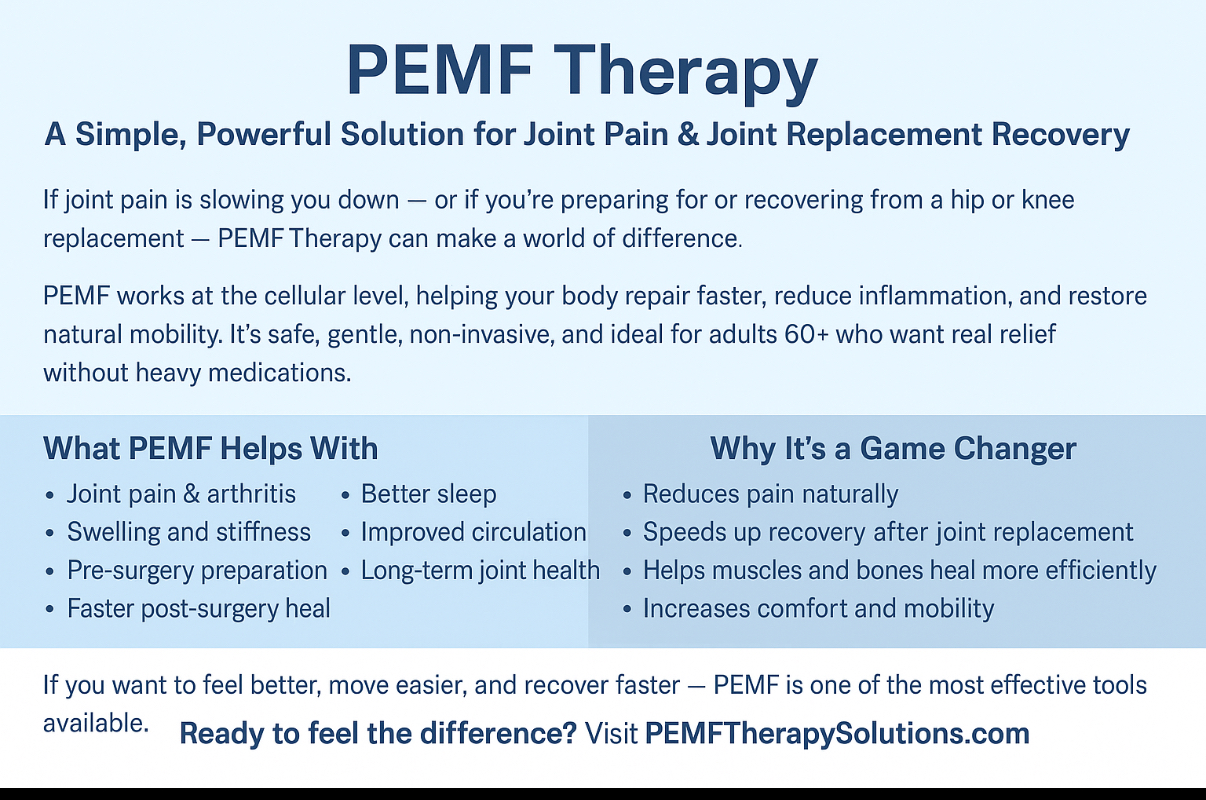
PEMF (Pulsed Electromagnetic Field) therapy:
- Reduces inflammation and pain
- Supports tissue, bone, and joint repair
- Boosts cellular energy, enhancing healing
- Provides control and reassurance during recovery
Other complementary therapies:
- Acupuncture
- Massage
- Nutrition and supplementation
- Mind-body practices: meditation, visualization, breathing exercises
Tip: Combine PEMF and complementary therapies with physical therapy, nutrition, and community support for a holistic recovery.
Final Thoughts: Take Charge of Your Journey
Hip and joint replacement recovery is a journey—sometimes slow, sometimes frustrating—but absolutely achievable. The keys to thriving include:
- Preparation: Prehab, home setup, nutrition, and mindset
- Support: Community, sponsors, friends, and family
- Recovery strategies: Physical therapy, safe exercise, and pain management
- Complementary tools: PEMF therapy, acupuncture, and holistic approaches
You don’t have to go through this alone. Build your team, trust your body, and embrace every step toward healing. Your new joint is not just a replacement—it’s a chance to reclaim your mobility, confidence, and life.
 Hipster Club
You must be logged in to post a comment.