Hip Resurfacing Operation Loses Important Endorsement – NYTimes.com


In another controversy involving all-metal hips, an influential group has found that there is insufficient evidence to show that an alternative technique known as hip resurfacing is as safe and effective as a traditional replacement.

via Hip Resurfacing Operation Loses Important Endorsement – NYTimes.com.

Patient Guide to Metal-on-Metal Total Hip Replacements – Massachusetts General Hospital, Boston, MA

A Guide for Patients with Metal-on-Metal Total Hip Replacements

The Mass General Center for Metal-on-Metal Total Hip Replacement provides state-of-the-art comprehensive care to patients with metal-on-metal total joint replacements and conducts cutting-edge research. Our physicians and researchers have transformed basic discoveries into clinical practice and provide critical evaluation for and specific advice for metal-on-metal implants.

Because some patients with Metal-on-Metal (MoM) hip replacements develop unexplained pain, and because a few develop abnormal tissue reactions to the wear of the implants and require a reoperation, we established a Center that patients could rely on for comprehensive clinical evaluation.

In the majority of cases, conventional pre-operative tests (plain radiographs and standard blood tests) do not reveal any abnormality. Thus, the ordinary follow up evaluation may be of limited value. The mission of Mass General Center for Metal-on-Metal Total Hip Replacement is to provide excellence in clinical care to MoM patients by integrating various specialized tests (analysis of blood samples for metal ions, and imaging studies) in order to establish if an adverse reaction to MoM THR implants is present and to formulate the best way to treat these problems.

via Patient Guide to Metal-on-Metal Total Hip Replacements – Massachusetts General Hospital, Boston, MA.

A Scramble for Solutions as a Hip Device Fails – NYTimes.com

Some patients with all-metal hips — ones in which the cup and ball of a joint is made of metal — said they had been bounced from doctor to doctor who did not have the knowledge or the tools to properly diagnose the problem. And by the time they reach specialists like Dr. Kwon at Massachusetts General Hospital, potentially lasting damage may have already taken place.

Dr. Kwon’s recent patient, Robert Cartier, said he saw seven doctors over the course of a year who told him not to worry or who gave him shots for his pain. Diagnostic tests also did not point to a problem. Only recently have researchers determined that such scans need to be run in a specific way to detect the extent of metal-related damage.

via A Scramble for Solutions as a Hip Device Fails – NYTimes.com.

Hip Replacement Tips – Things You Wish You Had Known Before Hip Replacement

Have you recently had a hip replacement? Hip replacement surgery is a major procedure, and there are many questions that you likely had going in to the procedure. But what about things you learned along the way that you wish you had known prior to your hip replacement. What knowledge would you share with someone who needs their hip replaced?

via Hip Replacement Tips – Things You Wish You Had Known Before Hip Replacement.

New HIP Social Network!

Join our HIP Social Network (like Facebook) for HIPSTERS!

Click here!

In addition to this blog, this is our new  social network to connect with other Hipsters worldwide!

How HIP is TOO HIP?

Featured

Airport Security! Front Cover

I’ve been through a lot of security check points in the past 5 bionic years of airport travel, I’ve been prodded in New York, wanded in Washington DC, intimately viewed in Hawaii, and touched in San Francisco.

BUT…I have never been wanded, prodden THEN taken to a private room, and asked to show my hip replacement scars before…that was a first (in London, by the way).

So, down went my pants to present my surgery souvenirs to polite but perfect strangers.

I know the world is changing, with heightened security and all that it entails – however how much is too much?

I ask YOU!

Live Web Event Highlights Anterior Approach to Total Hip Replacement

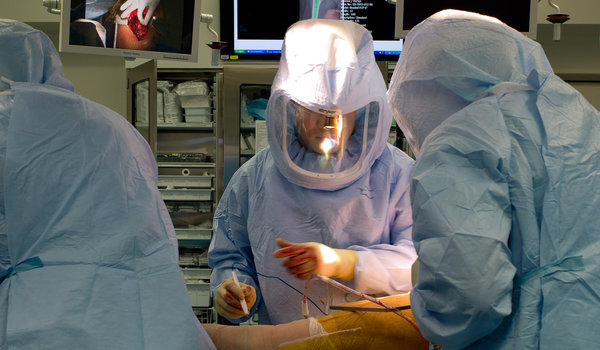
WEST HARTFORD, CT–(Marketwire – Aug 22, 2011) – BroadcastMed, Inc.’s surgical web portal ORLive.com is proud to present a live web program from Santa Monica, CA. Dr. Joel M. Matta will perform a less invasive, alternative to traditional hip replacement surgery called the Anterior Approach. Using the Corail® Total Hip System and the PINNACLE® Acetabular Cup System from DePuy Orthopaedics, Inc., as well as a specialized surgical table co-designed by Dr. Matta, he will perform the surgery at Saint John’s Health Center in Santa Monica, CA.

“The Anterior Approach allows surgeons to work between the muscles, without detaching them from the hip or thighbones,” said Dr. Matta. “When these important muscles are left relatively undisturbed, patients may be able to freely bend their hip and bear full weight immediately following surgery, which may shorten recovery time.”

via Live Web Event Highlights Anterior Approach to Total Hip Replacement.

They have the technology

Lock, who has performed about 600 knee and hip replacements over the last three years using the Zimmer technology, said it reduces both patient recovery time and the likelihood that the patient will have to return for an adjustment. That said, he admitted the technology can sometimes be a hard sell to hospital administrators, given that many of the cost savings are only obvious in the long term.

via Mohave Daily News > Archives > News > Local > They have the technology.

History of Hip Replacements

   History

The earliest recorded attempts at hip replacement (Gluck T, 1891), which were carried out in Germany, used ivory to replace the femoral head (the ball on the femur).1

In 1940 at Johns Hopkins hospital, Dr. Austin T. Moore (1899–1963), an American surgeon, reported and performed the first metallic hip replacement surgery. The original prosthesis he designed was a proximal femoral replacement, with a large fixed head, made of the Cobalt-Chrome alloy Vitallium. It was about a foot in length and it bolted to the resected end of the femoral shaft (hemiarthroplasty). This was unlike later (and current) hip replacement prostheses which are inserted within the medullary canal of the femur. A later version of Dr. Moore’s prosthesis, the so-called Austin Moore, introduced in 1952 is still in use today.

In 1960 a Burmese orthopaedic surgeon, Dr. San Baw (29 June 1922 – 7 December 1984), pioneered the use of ivory hip prostheses to replace ununited fractures of the neck of femur when he first used an ivory prosthesis to replace the fractured hip bone of an 83 year old Burmese Buddhist nun, Daw Punya.2 This was done while Dr. San Baw was the chief of orthopaedic surgery at Mandalay General Hospital in Mandalay, Burma. Dr. San Baw used over 300 ivory hip replacements from the 1960s to 1980s. He presented a paper entitled “Ivory hip replacements for ununited fractures of the neck of femur” at the conference of the British Orthopaedic Association held in London in September 1969. An 88% success rate was discerned in that Dr. San Baw’s patients ranging from the ages of 24 to 87 were able to walk, squat, ride a bicycle and play football a few weeks after their fractured hip bones were replaced with ivory prostheses. Ivory may have been used because it was cheaper than metal at that time in Burma and also was thought to have good biomechanical properties including biological bonding of ivory with the human tissues nearby. An extract from Dr San Baw’s paper, which he presented at the British Orthopaedic Association’s Conference in 1969, is published in Journal of Bone and Joint Surgery (British edition), February 1970. With modern hip replacement surgery, one can expect to walk immediately post-op.