Because of my orthopaedic care, I can…” It isn’t too late to submit your patients’ stories

Featured

The American Academy of Orthopaedic Surgeons’ national campaign, A Nation in Motion, shares the stories of more than 600 patients whose lives have been saved or restored through access to high-quality orthopaedic care. These inspiring stories illustrate the conditions, injuries and traumas that millions of patients have braved head on – and the excellent care that got them back to work and to their active, full lives. The patients featured on the website have shared their stories in one simple phrase, “Because of my orthopaedic care, I can…” It isn’t too late to submit your patients’ stories on the site.

Visit anationinmotion.org to submit, read the stories, and to play A Nation in Motion the Game online, and navigate the path of orthopaedic scenarios throughout life before you can successfully reach the “I Can! Club.” The “I Can! Club” represents a full, enjoyable and mobile life.


Hip Replacement Pre-Op and Post-Op Surgery Diary

Things aren’t good when your 83-year-old father has more energy and stamina than you do. An athletic and highly active person since childhood — whose activities included jazz dance, softball, horseback riding, cycling and sailboat racing — I found my life shrinking at 52 due to arthritis in my left hip.

When I’d been diagnosed with it two years earlier, I continued many of my activities. But by the time I was 52, in January 2010, every step was painful, and a hip replacement was inevitable.

See also: 5 steps to a successful hip replacement.

Hip Replacement Pre-Op and Post-Op Surgery Diary – AARP

TIP ONE – the Doctor Visit

Things you need to know when you visit your Doctor….Tip One!

A HIP New World


Well, the more people I meet, the more I hear about becoming bionic – with all types of body parts being replaced…it’s pretty surreal, especially when you go through it yourself.


Be Your Own Advocate in the Hospital

It is important to be your own advocate and know WHAT TO ASK FOR IN THE HOSPITAL!  WATCH THIS VIDEO….

AND have a HIP BUDDY!

Questions To Ask Before Hip Surgery

Questions To Ask Before Hip Surgery by Zimmer

Here’s a list of questions that may be helpful to ask your doctor before your hip surgery. We suggest you print this list and take it with you on your appointment.


  1. What complications may occur with this kind of surgery?
  2. What is the expected recovery time?
  3. How many days will I be in the hospital after surgery?
  4. Will I have physical therapy? If so, how often and for how long?
  5. Will I need full-time or part-time care? If so, for how long?
  6. Will I need a hospital bed at home?
  7. When can I lie on the operative side?
  8. How soon will I be able to walk after surgery?
  9. Will I need crutches or a walker? If so, for how long?
  10. How soon will I be able to climb stairs after surgery?
  11. How soon will I be able to drive a car after surgery?
  12. When can I shower after surgery?
  13. How soon will I be able to resume normal lifestyle activities besides walking (e.g., work, sports, housework, gardening, etc.)?
  14. Which sports may I participate in?
  15. What are lifting limits?
  16. When is sexual intercourse feasible after surgery?
  17. Will I set off the metal detectors at the airport?
  18. Will I need antibiotics for dental care?
  19. What is the implant made of? Which biomaterials will be used?
  20. In your estimate, how long will my joint replacement last?
  21. What can I do to help keep my joint replacement functioning as long as possible?
  22. What activities or other factors could make my joint replacement wear out more quickly, and what can I do to avoid them?

Hip Replacement Implant Options – Metal, Plastic, Ceramic, Hip Implants

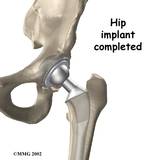
Hip replacements are among the most common orthopedic procedures. When a hip replacement is performed, the arthritic, damaged hip joint is removed. The ball-and-socket hip joint is then replaced with an artificial implant. The materials used in the implant depend on several factors, including the age of the patient, the activity level of the patient, and the surgeon’s preference.

Below are brief descriptions of some of the most commonly used hip replacement implants. Not all implants are options for all patients. These are general statements about the different implants; if you have specific questions about a particular implant you must discuss this with your doctor!

via Hip Replacement Implant Options – Metal, Plastic, Ceramic, Hip Implants.

METAL TOXICITY TESTING

Sources of common metal exposure are:

• Dental restorations: fillings, crowns, pins, root-fillings, implants. Amalgam/silver fillings contain mercury, silver, tin, copper and zinc. Crown can contain gold, silver, palladium, copper, chromium, indium, gallium, iridium, nickel and more. Implants are often made of titanium, aluminium and vanadium.

• Orthopedic and body implants such as hip replacements, screws, nails, clips, usually made from titanium or stainless steel.

• Common implant alloys are:

• Stainless steel: Nickel, chromium, manganese, molybdenum

• Cobalt-chromium molybdenum steel: Chromium, molybdenum, nickel, iron, manganese, tungsten, aluminum, titanium, cobalt

• Vitallium: Cobalt, chromium, manganese, molybdenum

• Titanium: Aluminum, vanadium, nickel (trace)

via METAL TOXICITY TESTING.

Common Materials Used in Implants

Common Materials Used in Orthopaedic ImplantsGenerally, the most common materials used in orthopaedic implants are metals and a type of plastic called polyethylene. These two material types are combined in most joint implants, that is, one component is made from metal, and one from polyethylene. When properly designed and implanted, the two components can rub together smoothly while minimizing wear. While some pure metals have excellent characteristics for use as implants, most metal implants are made from a mixture of two or more metals. These mixed metals are called alloys. By combining metals, a new material can be created that has a good balance of the desired characteristics. The most common metal alloys used in orthopaedic implants are stainless steels, cobalt-chromium alloys, and titanium alloys.

via Common Materials Used in Orthopaedic Implants.