Unknown's avatar

About Jodi Seidler

Patient Advocate and Health Consultant, Helping patients discover freedom from pain, and promote healthy aging with PEMF Therapy Devices.

Questions To Ask Before Hip Surgery

Questions To Ask Before Hip Surgery by Zimmer

Here’s a list of questions that may be helpful to ask your doctor before your hip surgery. We suggest you print this list and take it with you on your appointment.


  1. What complications may occur with this kind of surgery?
  2. What is the expected recovery time?
  3. How many days will I be in the hospital after surgery?
  4. Will I have physical therapy? If so, how often and for how long?
  5. Will I need full-time or part-time care? If so, for how long?
  6. Will I need a hospital bed at home?
  7. When can I lie on the operative side?
  8. How soon will I be able to walk after surgery?
  9. Will I need crutches or a walker? If so, for how long?
  10. How soon will I be able to climb stairs after surgery?
  11. How soon will I be able to drive a car after surgery?
  12. When can I shower after surgery?
  13. How soon will I be able to resume normal lifestyle activities besides walking (e.g., work, sports, housework, gardening, etc.)?
  14. Which sports may I participate in?
  15. What are lifting limits?
  16. When is sexual intercourse feasible after surgery?
  17. Will I set off the metal detectors at the airport?
  18. Will I need antibiotics for dental care?
  19. What is the implant made of? Which biomaterials will be used?
  20. In your estimate, how long will my joint replacement last?
  21. What can I do to help keep my joint replacement functioning as long as possible?
  22. What activities or other factors could make my joint replacement wear out more quickly, and what can I do to avoid them?
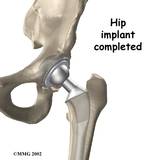
Hip Replacement Implant Options – Metal, Plastic, Ceramic, Hip Implants

Hip replacements are among the most common orthopedic procedures. When a hip replacement is performed, the arthritic, damaged hip joint is removed. The ball-and-socket hip joint is then replaced with an artificial implant. The materials used in the implant depend on several factors, including the age of the patient, the activity level of the patient, and the surgeon’s preference.

Below are brief descriptions of some of the most commonly used hip replacement implants. Not all implants are options for all patients. These are general statements about the different implants; if you have specific questions about a particular implant you must discuss this with your doctor!

via Hip Replacement Implant Options – Metal, Plastic, Ceramic, Hip Implants.

METAL TOXICITY TESTING

Sources of common metal exposure are:

• Dental restorations: fillings, crowns, pins, root-fillings, implants. Amalgam/silver fillings contain mercury, silver, tin, copper and zinc. Crown can contain gold, silver, palladium, copper, chromium, indium, gallium, iridium, nickel and more. Implants are often made of titanium, aluminium and vanadium.

• Orthopedic and body implants such as hip replacements, screws, nails, clips, usually made from titanium or stainless steel.

• Common implant alloys are:

• Stainless steel: Nickel, chromium, manganese, molybdenum

• Cobalt-chromium molybdenum steel: Chromium, molybdenum, nickel, iron, manganese, tungsten, aluminum, titanium, cobalt

• Vitallium: Cobalt, chromium, manganese, molybdenum

• Titanium: Aluminum, vanadium, nickel (trace)

via METAL TOXICITY TESTING.

Common Materials Used in Implants

Common Materials Used in Orthopaedic ImplantsGenerally, the most common materials used in orthopaedic implants are metals and a type of plastic called polyethylene. These two material types are combined in most joint implants, that is, one component is made from metal, and one from polyethylene. When properly designed and implanted, the two components can rub together smoothly while minimizing wear. While some pure metals have excellent characteristics for use as implants, most metal implants are made from a mixture of two or more metals. These mixed metals are called alloys. By combining metals, a new material can be created that has a good balance of the desired characteristics. The most common metal alloys used in orthopaedic implants are stainless steels, cobalt-chromium alloys, and titanium alloys.

via Common Materials Used in Orthopaedic Implants.

Mercola.com Workout Plan

Exercise is like medicine and is sometimes best “taken as prescribed” to optimize your health. Whether you’re a beginner, intermediate or advanced, the workout “prescription” below covers the most important variables to keep in mind when creating and performing your fitness program and to help you reap maximum results. The Three Pillars of Fitness Most every fitness program should include the following pillars at their base. These are the foundation that holds your program together….

READ MORE…By Dr. Mercola

Do you have a chronic degenerative disease? If so, have you been told, “It’s all in your head?”

Do you have a chronic degenerative disease?  If so, have you been told, “It’s all in your head?”

Well, that might not be that far from the truth… the root cause of your illness may be in your mouth.

There is a common dental procedure that nearly every dentist will tell you is completely safe, despite the fact that scientists have been warning of its dangers for more than 100 years.

Every day in the United States alone, 41,000 of these dental procedures are performed on patients who believe they are safely and permanently fixing their problem.

READ MORE…

Welcome to Being More HIP


You’re NOT Alone!


Join our HIPSTER CLUB!
Click to join hip_hip_replacement

Click to join hip_hip_replacement


If you’ve landed on this site – you have either been initiated into the Club with a hip replacement or two, OR you are researching that path.  Within the pages of this community, you are able to sign up for HIP tele-classes and support groups; and we are establishing HIP Happy Hours state-wide.

It’s here you’ll find the latest research, articles, testimonials and most importantly you’ll meet other hipsters of all ages who have joined the ranks of bionic.

Hip Hip Hurray – you’ve found a home — people who KNOW what you’ve gone through or ARE going through.  We’ll support you and hold you hand along the way!

For more information, please email me at Jodiseidler@hipsterclub.com.

HIP HIP Hurray for ZIMMER!

Hip Pain Relief: Nonsurgical Treatments

Hip Pain Relief: Nonsurgical Treatment Options

When it comes to relieving hip pain, there are many different treatment options. Success varies not only by each individual’s hip, but also by what’s causing your hip pain. Care for arthritis pain, for example, often involves a combination of treatments. Be sure to consult your doctor to discuss the best treatment plan for you.

  • Medication
    Many drugs, both prescriptions and over-the-counter medications, are used to treat arthritis and control pain. Common medications are aspirin-free pain relievers, anti-inflammatory drugs, corticosteroids, disease modifiers, and sleep medications.
  • Low-impact exercise
    Regular exercise, including joint and muscle exercise, is important to improve strength and flexibility. It may lessen pain, increase movement, reduce fatigue, and help you look and feel better. And when done properly, it will not “wear out” joints or increase osteoarthritis.
  • Heat/cold therapies
    Use of heat or cold over joints may provide short-term relief from pain and stiffness. Cold packs/baths help reduce inflammation and swelling, and may be useful for flare-ups. Heat assists in relaxing muscles and increasing circulation.
  • Weight management
    Weight loss helps to ease pain by reducing stress on your joints. After all, your hip bears the full load of your weight.
  • Physical and occupational therapy
    Physical therapists can work with you to create a personalized exercise program and show you how to use therapeutic heat and massage. Occupational therapists can introduce you to all kinds of beneficial devices, such as those used to elevate chair or toilet-seat height.
  • Assistive devices
    You can protect your hips by using a cane or other walking aid to keep from putting excess stress on them. Shoe inserts called orthotics are designed to support, align, and improve the function of your foot. In turn, they may lessen the pressure on your hips.
  • Bracing
    Different types of hip braces may help reduce hip pain and improve stability and mobility.
  • Avoidance
    Particular activities to avoid include: excessive stair climbing; impact-loading sports such as jogging, downhill skiing, and high-impact aerobics; physical activities involving quick stop-start motion, twisting, or impact stresses; excessive bending and kneeling; lifting or pushing heavy objects; and sitting on low seating surfaces and chairs. When avoidance is not possible, try alternating periods of activity with periods of rest, so your joints don’t tire from the stress of repeated tasks.
  • Mental health
    Talking about your feelings with family members and friends, doing mental exercises such as meditations and staying positive, and joining local support groups can help you better manage your hip pain.
  • Nontraditional and alternative treatments
    Some people with osteoarthritis take vitamins C and D because of their role in the formation of joint material, including collagen and cartilage. Some take vitamin E, a major dietary antioxidant. Glucosamine and chondroitin sulfate, typically used in combination, are the most commonly used dietary supplements, However, according to a study published in the 2006 New England Journal of Medicine, the results from a glucosamine/chondroitin arthritis trial showed that the supplements were no better at treating osteoarthritis than sugar pills.

Since herbal and dietary supplements are not regulated by the FDA, and the effectiveness of these treatments is not widely supported by accepted scientific research, it is extremely important for you to consult with your physician about all supplements and medications that you’re taking or considering taking.


CHEERS TO —   ZIMMER!


Meridian Tooth Chart Shows Teeth and Organ Relationships

Featured

Meridian Tooth Chart Shows Teeth and Organ Relationships

The front teeth are connected to the kidneys. The stomach is connected to the premolars. This is something that practitioners of Traditional Chinese Medicine have known for thousands of years.

Most people are familiar with Chinese Medicine or acupuncture and have heard about meridians , the channels through which energy flows in the body. Each organ, gland and body structure has an associated meridian, including the teeth.

What does all this mean to health and wellness? Well, if someone has a bad tooth, the energy flow through the meridian belonging to that tooth will be altered. This in turn can affect the health of all the other organs on that meridian. For example, Tooth Number 14, the upper left first molar tooth, is on the same meridian with the kidneys, liver, spleen, stomach and breast. So, if this tooth has a problem, it may affect energy flow through the meridian, and the health of those organs may be affected as well.

via Meridian Tooth Chart Shows Teeth and Organ Relationships