Using brainwaves to improve your mental state and reduce stress

Harnessing the Power of Brainwaves and PEMF for Mental Well-Being

Every action we take, every thought we have, and every emotion we experience has a biological component. The brain functions differently when we are asleep versus when we are under stress, like taking an important exam. Most of our behaviors and emotions directly influence the neurochemical reactions happening inside our brains. Knowing this, we can ask: is there a way to intentionally guide our biology to improve mental health, boost cognitive performance, and enhance overall quality of life?


Brainwaves: The Language of the Brain

Brainwaves are the result of electrical activity between neurons—specialized cells that communicate to regulate every aspect of our mind and body. Using technology such as EEG (electroencephalograph), scientists can measure these electrical patterns, which fall into five main categories: gamma, beta, alpha, theta, and delta, each with further sub-categories.

Different activities produce distinct patterns of brainwave activity. For instance, giving a speech or solving a challenging problem generates high beta frequencies, indicative of intense cognitive effort. In contrast, deep sleep is dominated by lower-frequency alpha, theta, and delta waves, which allow the brain and body to rest and regenerate. Understanding these patterns empowers us to intentionally engage in activities that enhance mental well-being.


Beta Waves: Focus and Productivity

Beta waves are the “fast” brainwaves. They dominate when we are actively thinking, solving problems, or concentrating on tasks that demand focus. Students studying for exams, professionals tackling complex projects, and anyone deeply engaged in cognitive work will experience elevated beta activity.

Enhancing beta waves: One method to boost beta activity is listening to beta binaural beats. These are audio tracks with slightly different frequencies played in each ear—for example, 200 Hz in the left ear and 220 Hz in the right ear. The brain perceives the difference as a 20 Hz beat, encouraging the production of beta waves and helping you stay focused and in the flow.

Caution: While beta waves help with concentration and productivity, too much beta activity can increase stress, anxiety, and irritability. Chronic overproduction of beta waves without sufficient rest can lead to sleep disturbances and mental fatigue. EEG studies show that people with high anxiety often have excessive beta activity paired with reduced alpha and theta waves—the frequencies needed for relaxation and recovery.


Alpha Waves: Relaxation, Creativity, and Mental Balance

Alpha waves range from 8–12 Hz and are associated with relaxed, yet alert mental states. They emerge when the brain is idle, calm, and not engaged in stressful activity. Alpha waves play a key role in creativity, emotional regulation, and mental well-being.

Research shows that increasing alpha wave activity can:

  • Reduce depressive symptoms in people with major depressive disorder
  • Enhance creativity, allowing for novel problem-solving and innovative thinking
  • Promote mental relaxation and emotional resilience

Increasing alpha waves naturally: Meditation, deep breathing, yoga, aerobic exercise, and even mindfulness practices can encourage alpha wave activity. These practices reduce stress, improve mood, and support a more balanced mental state.


Rewiring the Anxious Brain: Neurofeedback and Biofeedback

Many individuals struggling with anxiety exhibit excessive beta wave activity, particularly in the frontal brain regions. This can make it hard to relax, stay focused, or prevent negative thought spirals.

Neurofeedback—a form of biofeedback—has emerged as a promising tool to support mental health. Using neurofeedback, patients receive real-time feedback on their brainwave activity while engaging with audio-visual stimuli, such as video games. When the brain reaches desired activity patterns, it reinforces neural pathways that promote better self-regulation, focus, and emotional control.

Neurofeedback does not cure mental illness but works as an adjunctive therapy. Studies show that individuals with generalized anxiety disorder (GAD) or PTSD experience significant improvements in symptoms when neurofeedback is combined with traditional treatments like psychotherapy or medication.


PEMF Therapy and Brain Entrainment

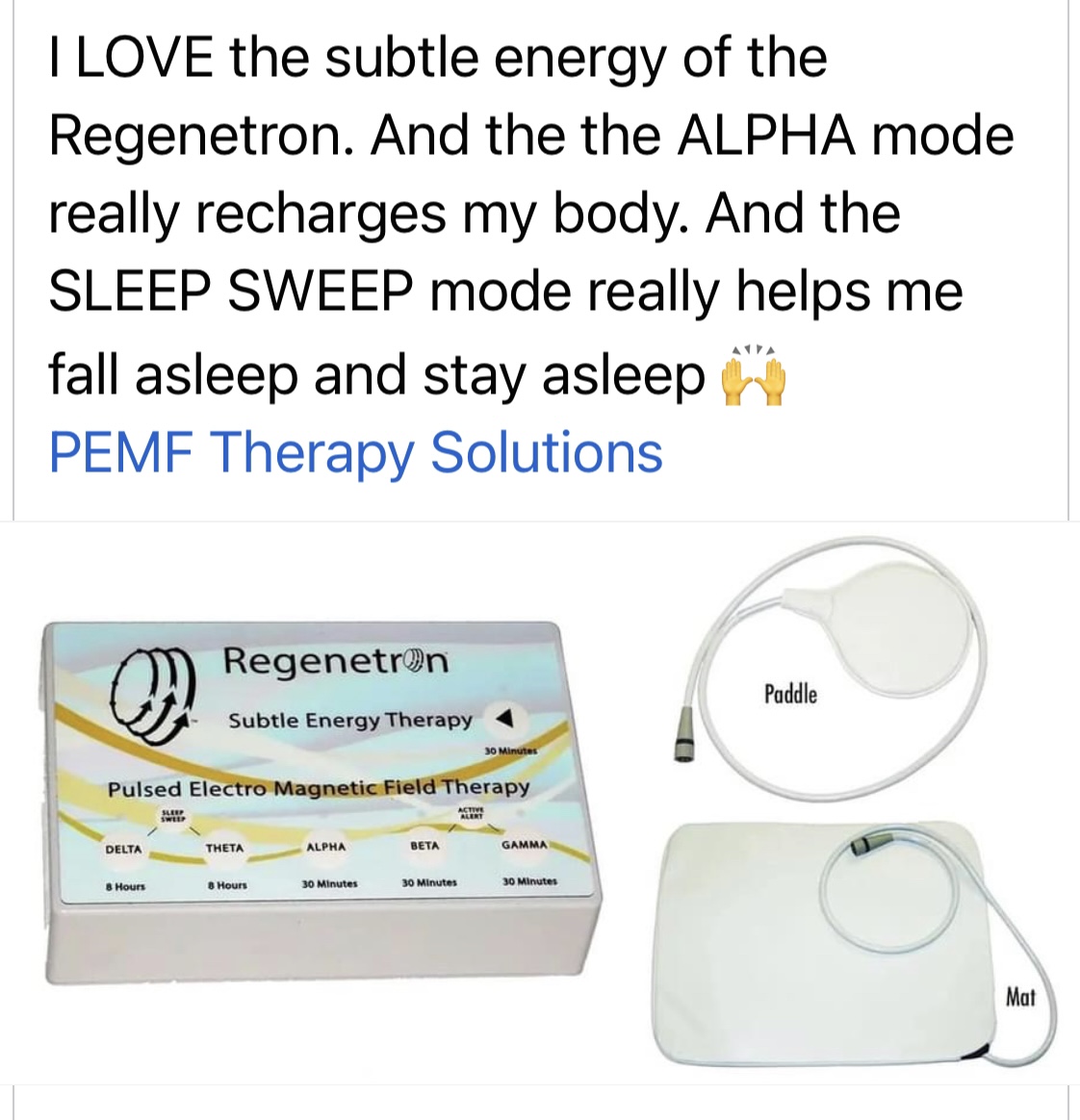
Our Regenetron PEMF system combines pulsed electromagnetic field (PEMF) therapy with brainwave entrainment. This dual approach:

  • Enhances cellular energy production and repair
  • Promotes circulation and oxygenation
  • Reduces inflammation and pain
  • Supports cognitive function and emotional balance

By stimulating both the body and brain, PEMF with brain entrainment can help optimize mental clarity, focus, and emotional resilience, complementing other therapies for a holistic approach to health.


Key Takeaways

  • Brainwaves influence mental performance, creativity, and emotional regulation.
  • Beta waves support focus and productivity but can increase stress if overproduced.
  • Alpha waves promote relaxation, creativity, and emotional balance.
  • Practices such as meditation, yoga, aerobic exercise, and deep breathing help shift brain activity toward alpha waves.
  • Neurofeedback and PEMF therapy with brain entrainment can support self-regulation, healing, and enhanced cognitive performance.

Understanding and harnessing your brain’s natural electrical activity can help you manage anxiety, improve focus, and cultivate a calmer, more creative, and resilient mind.

References

Ribas VR, Ribas RG, Nóbrega JA, da Nóbrega MV, Espécie JAA, Calafange MT, Calafange COM, Martins HAL. ‘Pattern of anxiety, insecurity, fear, panic and/or phobia observed by quantitative electroencephalography (QEEG)’. Dement Neuropsychol. 2018 Jul-Sep;12(3):264-271.

Alexander ML, Alagapan S, Lugo CE, et al. Double-blind, randomized pilot clinical trial targeting alpha oscillations with transcranial alternating current stimulation (Tacs) for the treatment of major depressive disorder (Mdd). Transl Psychiatry.
Treating Pain with PEMF

PEMF treats pain by blocking the messages transmitted to the brain through the nervous system. Natural endorphins are produced to block message transmission. Oxygenation can help with neuropathic pain. Inflammation is reduced in both tissue and nerves, decreasing pain. This article discusses how pain works in the body and how pain can be treated with PEMF.

The human body has a communication system which connects to the brain. The brain works like a supercomputer receiving and transmitting messages through a network of nerve cells.

The nerve cells are called neurons. The neurons have a nucleolus at the centre, which are connected to dendrites and axons – like a wiring mechanism of the nerves. The dendrites convey messages into the nucleolus; they are the input wires. The axons convey messages away from the nucleolus; they are the output wires.

Nerve cells connect at the axon terminals where the synapses are located. The axon of one nerve cell (the output) will connect to the dendrite of another nerve cell (the input), passing the message along. This happens at the axon terminal through chemical molecules called neurotransmitters.

According to medical wisdom, neurons cannot regenerate, but damaged axons can.

There are two primary networks of nerve cells:

  1. The central nervous system, whose axons are situated in the brain, the eye and the spinal cord (like the wires inside a computer).
  2. The peripheral nervous system, whose axons are situated outside of the central nervous system (like network wires).

Messages are transferred from the axons, and there are two types of axons:

  1. Sensory axons (inputs) carry messages from the skin, muscles, joints, internal organs and intestines to the central nervous system. These include sensations like touch, temperature, pain, muscle activity, and joint position.
  2. Motor Axons (outputs) control motion and carry signals from the central nervous system to the body, limbs, internal organs and intestines.

There are intermediate neurons inside the brain that connect the sensory and motor neurons.

Messages are transferred from the axons by electrical pulses called action potentials. These electrical pulses travel from the sensory axons to the central nervous system, activating the nerve cells and causing sensations.

The longer axons (or wires) are insulated with the myelin sheath, which increases the speed at which a message can travel down the axon (or wire). Shorter axons do not have myelin insulators, and messages travel slower through them. The shorter axons carry messages about touch, cold, warmth and pain. Because they are slower communication channels, a pain message from the foot can take about 1 second to reach the central nervous system (the spinal cord).

 A harmful sensation is simply an electrical pulse that is sent by the sensory axons to the central nervous system, where it is interpreted as “pain”.

Bone Growth with PEMF

PEMF works at a cellular level. All the cells are affected and the body’s systems which deliver oxygen and nutrients while removing toxins are enhanced. This revitalization results in the body’s components being able to perform the tasks they were designed for with optimal efficiency.  The bone structure within the body gives us form, but it also houses the marrow which is the factory where blood cells are produced. 

Osteoblast cells, (bone germination cells), produce bone matter.   Osteoblast cells work together as a group called the osteon and produce the calcium and phosphate-based minerals which are deposited into the organic matrix forming the strong and dense mineralized tissue called the mineralized matrix. Bones are comprised of a composite material made up of both collagen and minerals which give them tensile and compressive strength.  Bone cells are constantly being regenerated by the osteoblast cells.   PEMF can help heal and strengthen bones as it induces micro currents which stimulate the osteoblast cells to produce bone matter. This is critical to healing especially with those suffering from arthritis and osteoporosis

PEMF for Bone Growth

Understanding how cartilage works helps understand how PEMF helps.

The use of PEMF is critical in accelerating cartilage repair. PEMF energizes the chondrocyte cells which produce the cartilaginous matrix thus speeding up the production of cartilage. Therefore, the stimulation of these cells produces new cartilage where previously it was damaged or worn out. At the same time the osteoclasts break down bone structure that has been damaged, worn out, or weakened, while the osteoblasts are stimulated to regenerate new bone structure.

PEMF systems of a higher intensity are necessary to penetrate bone and provide healing, pain relief, and the effects of reverse osteoporosis. 

Don’t forget about PEMF

Causes and Treatments for Nighttime Hip Pain | Arthritis Foundation

Learn about four common causes of hip pain that keeps you awake.
— Read on www.arthritis.org/health-wellness/treatment/treatment-plan/you-your-doctor/causes-and-treatments-for-nighttime-hip-pain

Pain relief and Stem Cell Enhancement Patches

Whether you have pain that just won’t budge or you want to enhance your immune health system, these patches can be used with or without PEMF therapy. I’m a believer… Of both.

Try them out! Lifewave x39 patches.

Activate your stem cells with Patented phototherapy that is designed to elevate a peptide known to enhance stem cell activity.

Backed by over 10 years of research and development, as well as many clinical studies, X39® has been shown to provide an abundance of health benefits related to:

  • Activates stem cells
  • Mental clarity
  • Energy and vitality
  • Workouts and recovery
  • Skin appearance
  • Quality of and duration of sleep
  • Minor discomfort relief

To further understand the technology of the patches, we must understand a biological principle, namely that our body is as much electromagnetic as it is chemical. The patches are activated by a combination of body heat and the presence of the body’s electromagnetic aura.

These patches are made of amino acids and sugars and arranged molecular (nanotechnology) to become a sort of radio transmitter… sending magnetic signals that instruct the body’s cells to complete a certain function.

However In order for these mechanisms (to be able to respond to light), the cells of our bodies have what are called “photoreceptors”. The pharmaceutical model works with some type of drug or nutrient to produce a chemical response. Our cells can take in photons of light and produce chemical changes in the presence of different frequencies of light to be used for healing.

Get started now with these health enhancement patches. They compliment any other modalities you have in your anti-aging and health tool kit.

Lifewave x39 patches

Chronic Pain NO MORE

Featured

From Shock to Strength: How I Took Control of My Hip Journey

When I was first diagnosed with hip dysplasia and AO at age 50, I was completely unprepared. Shocked. Terrified. The pain was bone-on-bone, relentless, and made every step feel like a battle. But the hardest part wasn’t just the physical agony—it was the question: Why me?

I wasn’t a runner. I wasn’t a professional dancer. I was a swimmer and a walker, someone who lived an active but moderate life. And no one in my family had hip issues. How had this happened to me?

The pain wasn’t just an inconvenience—it was isolating. Walking the dog, climbing stairs, even bending to pick something up felt risky. Every movement was a reminder of my limitations. The fear extended beyond the pain—it was the fear of losing independence, facing surgery, and stepping into the unknown.

I spent countless hours online researching my condition, meeting orthopedic specialists, and trying to understand what was happening to my body. It was overwhelming. Anxiety was a constant companion. I wondered if I’d ever feel “normal” again.

Looking back, though, that combination of pain, fear, and curiosity became my fuel. It inspired me to help others navigate this journey. That’s the heart of this site: to provide knowledge, tools, and strategies so anyone facing hip pain or surgery can approach it with confidence, courage, and clarity.


Discovering PEMF: A Game-Changer for Hip Pain

During my journey, I discovered a tool that truly transformed my recovery: PEMF (Pulsed Electromagnetic Field) therapy.

I was introduced to PEMF before my surgeries, hoping to reduce inflammation, ease pain, and extend the time before I needed surgery. My routine became a mix of gentle stretching in a YMCA pool (yes, shower caps included!) and daily PEMF sessions at home.

The results were remarkable. Not only did it help physically—reducing pain and improving mobility—but it also eased the mental toll. Having a therapy I could control gave me a sense of agency, which is priceless when facing something as daunting as surgery.

Years later, PEMF remains a cornerstone of my recovery and wellness routine. It supports healing, immune function, and overall health, and helps me manage pain without relying on harsh medications.


PEMF 101: How It Works

PEMF devices come in several forms, depending on your needs:

  • Full-body mats: Energize every cell in your body

  • Localized paddles: Target specific joints like hips, knees, or shoulders

  • Brain entrainment devices: Support neurological function and cognitive health

But what makes PEMF truly remarkable is what it does at the cellular level.


Recharging Your Cells

Every cell in your body has essential duties:

  1. Generate energy

  2. Remove waste

  3. Repair and regenerate

  4. Perform specialized functions

PEMF enhances these processes. Magnetic fields move ions and electrolytes within tissues, sparking a cascade of chemical and electrical activity that boosts healing.

This activity increases ATP (adenosine triphosphate)—the energy currency of cells. Higher ATP means your cells have more energy to repair, regenerate, and function efficiently. Low ATP? Cells get fatigued, slow down, and become vulnerable to injury or disease. PEMF acts like a cellular power-up, helping your body recover faster and function better.


The Emotional Toll of Hip Pain

Hip pain is not just a physical challenge—it’s an emotional one. Chronic discomfort can bring:

  • Fear of movement: Every step feels risky

  • Isolation: Limiting activity cuts you off from friends, family, and community

  • Uncertainty: Questions about surgery, recovery, and long-term mobility can loom large

PEMF therapy, combined with education, support, and intentional movement, can ease both the physical and emotional burden. It gives you confidence to move, reassurance to heal, and control over your recovery.


Why PEMF Matters for Hip Recovery

If you’re recovering from hip surgery or managing chronic hip pain, PEMF therapy can help your body:

  • Heal faster: By energizing cells, tissue repair is optimized

  • Reduce inflammation and pain: Targeted therapy helps joints and soft tissues recover

  • Support bone and joint health: Aids bone remodeling and recovery after surgery

  • Enhance overall cellular function: Smooths the healing process and boosts long-term health


PEMF in Action: My Routine

Here’s what worked for me:

  1. Daily sessions at home: 20–30 minutes on a full-body mat or targeted paddle

  2. Movement therapy: Gentle swimming, stretching, and walking

  3. Tracking results: Pain, mobility, and emotional well-being

  4. Education and support: Connecting with communities and professionals for guidance

The combination of cellular energy, movement, and support gave me control over my hip journey and helped me approach surgery with confidence rather than fear.


Beyond the Physical: Taking Back Control

Hip replacement is about more than surgery—it’s about reclaiming your life. PEMF therapy helped me take control by:

  • Reducing pain without over-reliance on medication

  • Supporting recovery and mobility

  • Giving me a tool to actively participate in my healing

It’s a reminder that healing isn’t passive—you are an active player in your recovery, with tools, strategies, and knowledge to guide you.


Final Thoughts

Hip pain can feel overwhelming, isolating, and scary. But with PEMF therapy, proper movement, education, and emotional support, it doesn’t have to be.

Your journey is unique, but these tools give you:

  • Energy at the cellular level to heal faster

  • Relief from pain and inflammation

  • Confidence to move safely and actively

  • Support to navigate emotional challenges

Empower your recovery: Hip pain doesn’t have to define your life. With the right strategies, you can regain mobility, restore confidence, and take control of your recovery—one empowered step at a time.

The Hipster Club!

Featured

Thanks for finding The Hipster Club….if you got here – You or someone you know, are, or are soon to be, TOO hip.  We are a community of hipsters initiated by pain.

No one knows bone-on-bone pain until you have experienced it…woken up in the middle of the night with excruciating no-cartilage pain when turning over…locked and jolted when standing up after sitting for a while…that limp that causes people to do a double-take on your gait.  We could go on and on…

Soon, the operation day arrives side by side with your fear of the unknown. Your fear of pain, pain medication and the what-ifs of surgery wakes up before you do.  The ‘fat lady has sung’, we bit the bullet and soon we, like magic, wonder why we ever waited so long.

We are here to support, educate, inspire and transform our hipster status, by becoming and remaining our own advocates. And this includes helping others…so, all  I ask is to pay it forward.